A candlelit long table set in TABLE QIRON’s shadowed underground restaurant setting.

Private events / Toronto

HOST THE ROOM AFTER DARK

TABLE QIRON stages private gatherings as hosted nights: dinner, low light, close conversation, and the pull of an underground casino lounge in one physical setting. Bring an occasion with a point of view, then let the restaurant and late-night room give it momentum.

Start an event enquiry

Your first details give the team a clear place to begin.

01 / Event sequence

A NIGHT WITH MORE THAN ONE ACT

Rather than beginning with a fixed template, start with the pace you want guests to feel. TABLE QIRON can hold a dinner-forward opening, a shift toward the lounge, and a looser social close as connected movements of the same night.

01

Dinner as the opening movement

A shared table gives the gathering its first rhythm: conversation finding its footing, plated dishes arriving into low light, and chef-led food remaining present without turning the evening into a formal script. Hosts can describe the kind of table pace they imagine, from composed and intimate to more animated, so the conversation begins with the feeling of the meal rather than a pre-set package.
02

The lounge as the turn

Later, the underground lounge can change the temperature of the room. Card-room ambience, roulette, blackjack, and the visual pull of tables and shadows offer a different social register after dinner. This is not a promise of a particular table or arrangement; it is a useful way to describe the atmosphere and play-led energy you would like the team to understand.

03

A social close

For a later phase, social poker evenings, conversation, and music-led room energy can make the gathering feel less formal and more shared. The important detail is the host’s intention: a quiet toast, a group reconnection, a milestone, or an after-hours social. Put that mood in the enquiry, and the planning discussion can start from the kind of night you want to hold.

02 / Two registers

DINNER, THEN THE ROOM CHANGES

TABLE QIRON lets a private event begin with the composed attention of the restaurant and continue into a more nocturnal underground register. Tables, service rhythm, candlelight, and conversation establish the first scene; later, hands at felt, darker corners, and the energy around the lounge reshape it. The format is discussed with the team, not assumed in advance.

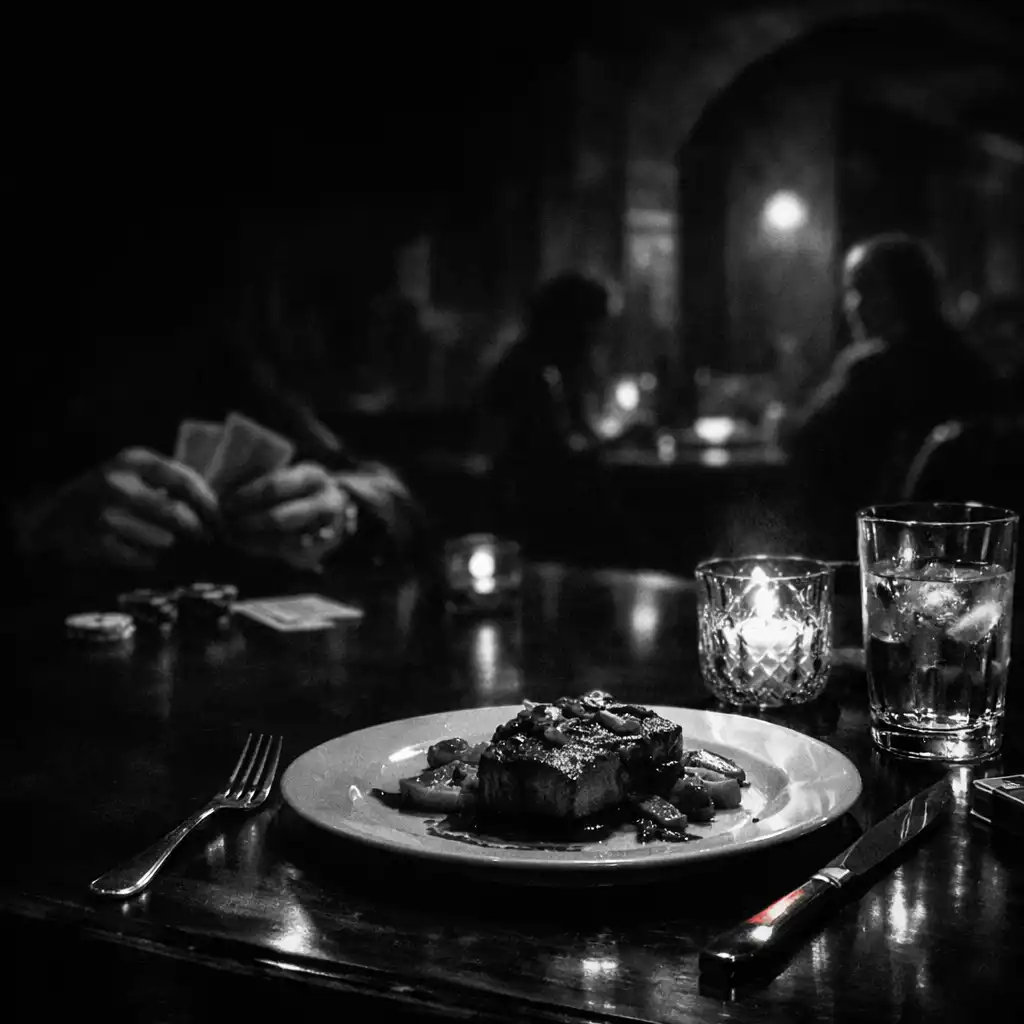
A plated dish and candlelit table in the foreground, with cards and hands visible deeper in a shadowed lounge.
Register shift / plated table to underground lounge texture.

03 / Mood directions

CHOOSE THE ATMOSPHERE, NOT A TEMPLATE

Three ways to describe a night without turning them into tiers. Use them as reference points when you tell us what you are gathering around.

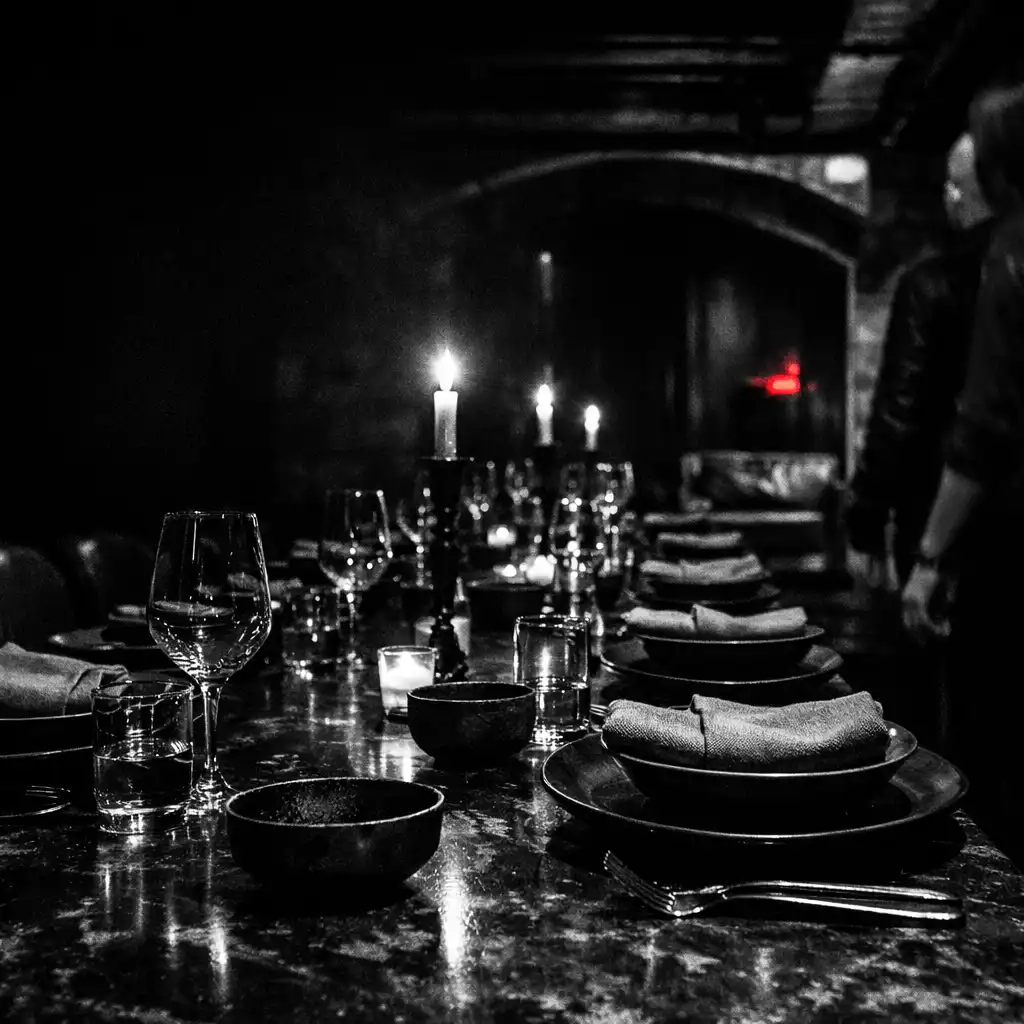
A detailed view along a dimly lit long dining table set for an evening gathering.
Frame 01 / table-led

The long-table occasion

For hosts who want the table and conversation to carry the night, this direction begins close to the plates, glassware, and people across from one another. The visual mood is intimate and dining-forward, with a slower opening rhythm that leaves room for arrivals, stories, and the presence of chef selections. It is a way to describe tone, not a claim about group size or menu format.

Enquire about a long-table occasion
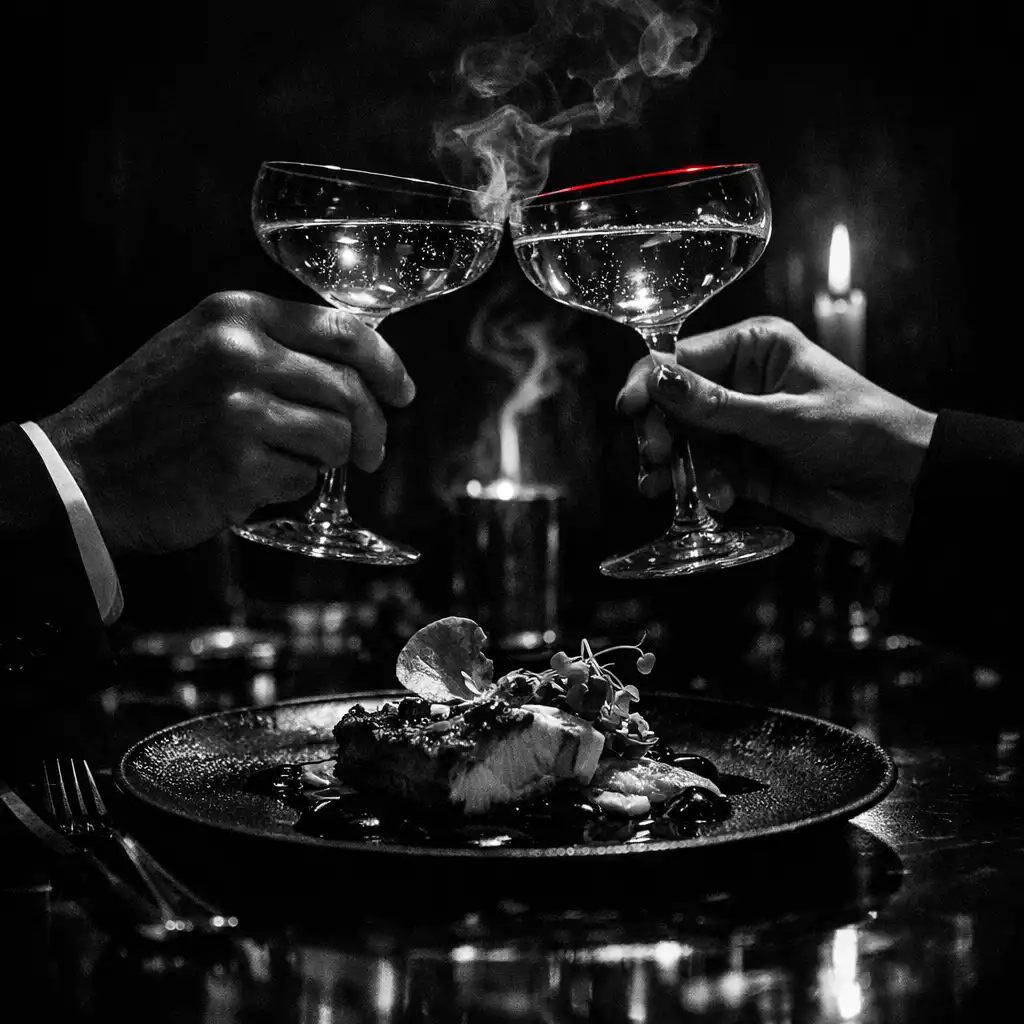
Coupe glasses and a plated course catching candlelight on a dark celebration table.
Frame 03 / celebration detail

The whole-night celebration

For birthdays, milestones, or group occasions that want an evening with an arc, imagine the room changing rather than the gathering stopping after dinner. Guests arrive, dine, reconnect, and settle into a different late-night mood. Share the kind of transition you picture in the enquiry, and the team can begin the conversation from the full shape of the occasion.

Enquire about a whole-night celebration

04 / Room fragments

THE ROOM IN FRAGMENTS

Small material cues matter when a group is choosing where to gather: the line of a table, ash light on porcelain, hands moving through shadow, and the feeling that the setting is already doing some of the hosting.

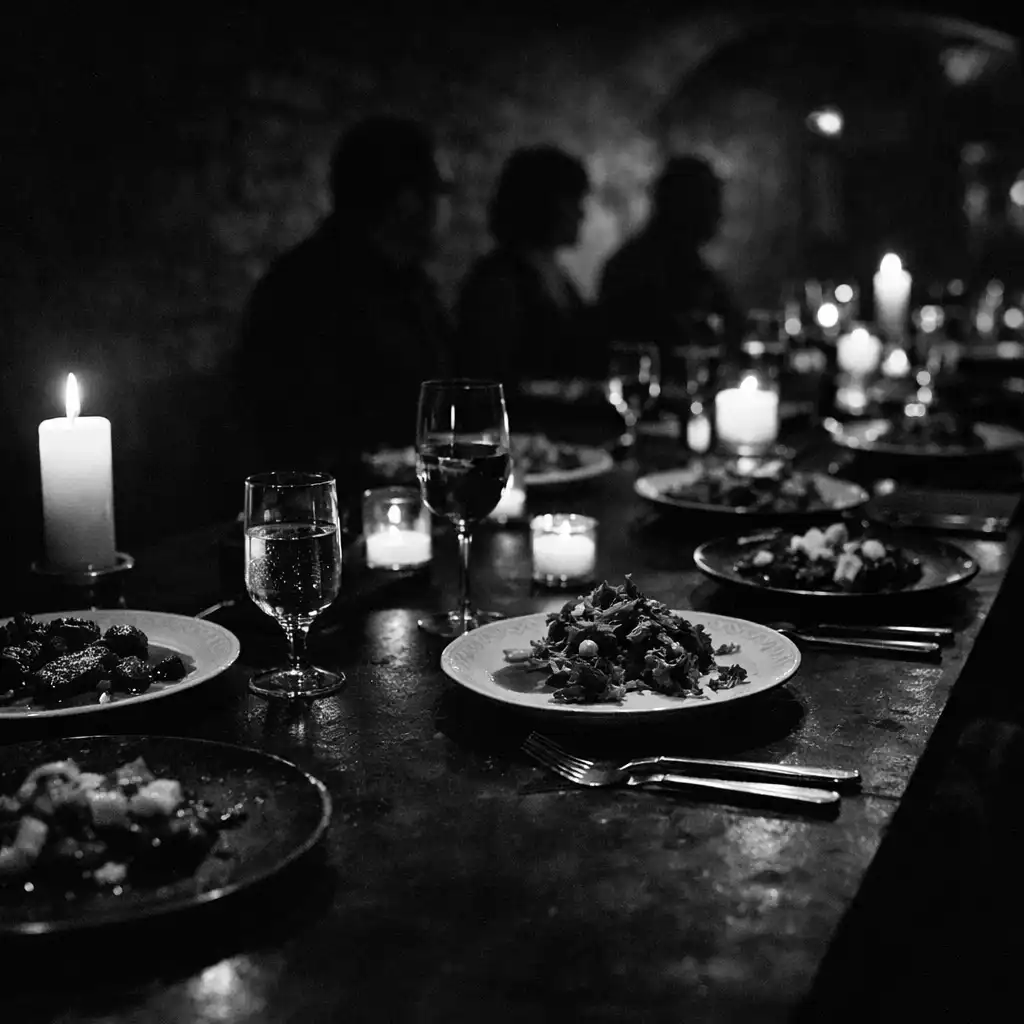
Plated courses, glasses, candles, and dark table surfaces in a late-night dining room.
Coordinate A / table light Plated detail, dark surfaces, and ash-white highlights make the dining side feel intentional without pulling attention away from the people at the table. It is an atmosphere for hosts who want conversation to remain visible in the room.
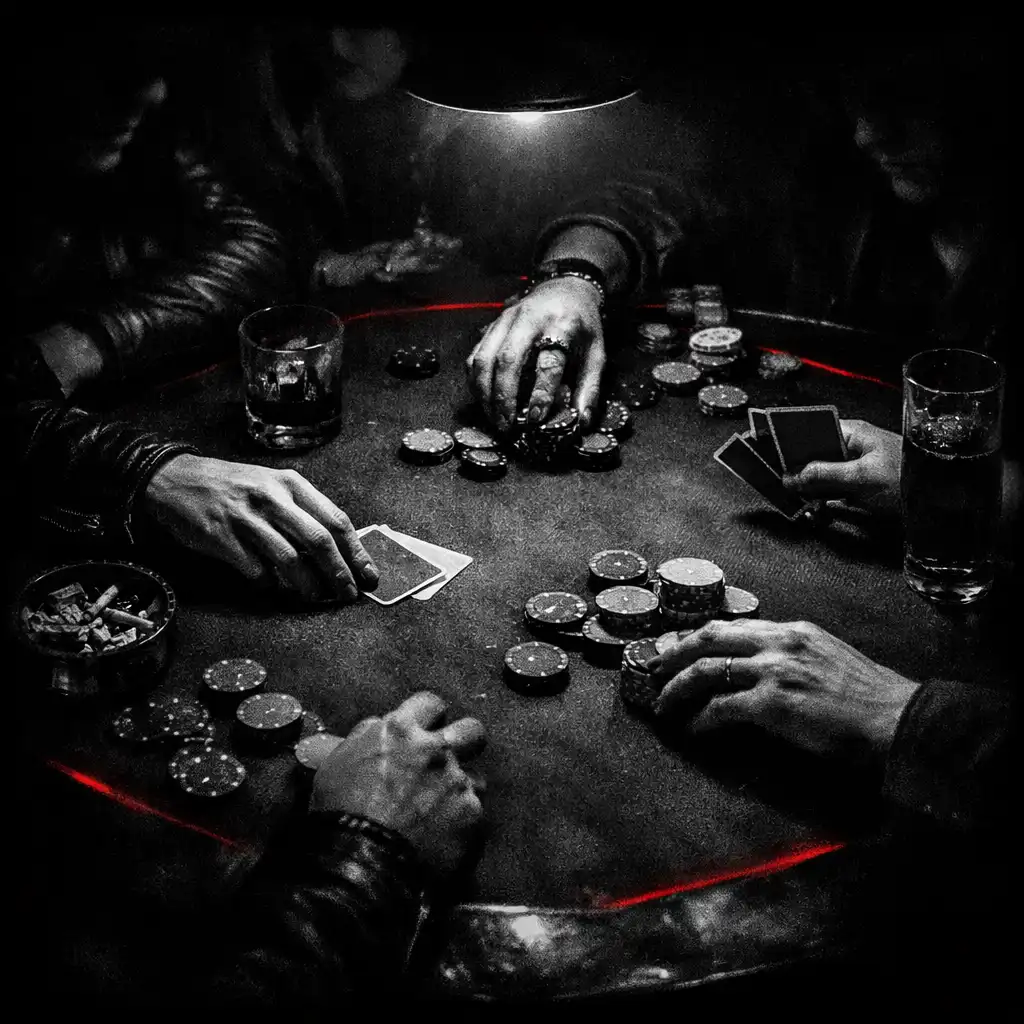
Hands, cards, chips, and a drink gathered around a dark underground lounge table.
Coordinate B / card-room texture Hands at tables, patterned shadow, and close late-night detail give the lounge a more charged social register after dinner. The image is mood evidence, not a promise of a particular table arrangement.

05 / Planning rail

FROM BRIEF TO NIGHT

A clear first note lowers the friction. The rest is a direct conversation about the shape and atmosphere of the gathering.

  1. 01

    Send the essentials

    Share the occasion, preferred date, estimated guest count, and the kind of night you want to create. These are useful prompts for an enquiry, not a demand for a finished plan. A few practical anchors help the first conversation begin in the right place.

  2. 02

    Shape the rhythm

    Use the conversation to discuss how dinner, underground lounge atmosphere, and social play might relate across the evening. The point is to plan the progression you imagine, using the venue’s dining and lounge experiences as the physical context.

  3. 03

    Confirm details together

    After you make contact, event details are worked through directly with the TABLE QIRON team. The early brief gives the discussion direction while leaving room to clarify what matters most to your gathering without making assumptions about policies or timing.

  4. 04

    Arrive to a coherent night

    The aim is a gathering that feels connected from the first table conversation through to the later energy of the room. Keep the focus on the atmosphere guests should carry with them, rather than on a list of disconnected moments.

06 / Host prompts

WHAT TO BRING TO THE BRIEF

A useful enquiry can be short. These prompts simply give the team a better read on what you want the gathering to feel like before the details are discussed.

Prompt 01

The occasion

Name the reason for gathering and the emotional register you want it to carry. A celebration, group dinner, team gathering, or after-hours social can all be helpful starting points rather than fixed event categories.

Prompt 02

The date window

Share a preferred date and any flexibility around it. That practical anchor lets the conversation start with context, without implying that options or availability are already confirmed.

Prompt 03

Your group

An estimated guest count is useful at first contact, along with whether the gathering should feel intimate, social, or more expansive. An estimate is enough; there is no need to arrive with a final number.

Prompt 04

Food and pacing

Include your dining expectations and whether food feels like the main event, an opening chapter, or one part of a longer evening. Chef selections can be part of that conversation without assuming a particular menu or service format.

Prompt 05

The desired room energy

Say whether you are drawn toward a table-led dinner, card-room ambience, or a progression between the two. Roulette, blackjack, and social poker evenings help describe the wider venue language, while your note gives the team a clearer sense of the mood.

08 / Clear answers

PRIVATE EVENTS, ANSWERED PLAINLY

Helpful context before you send a first brief. If the gathering is still taking shape, the enquiry form and direct contact route are there when you are ready.

09 / Start the brief

SEND THE FIRST VERSION

Send the first version of your brief. An occasion, preferred date, estimated guest count, and a few words about the room energy are enough to start. Add dining expectations or any useful context in the notes, and TABLE QIRON can respond to your request directly.

A contact number if you prefer a call.

A date window is useful if you have one.

A short description helps set the first direction.

You do not need a final number for a first enquiry.

Choose a direction or explain it in your notes.

Include dining expectations, pacing, or any detail that gives the gathering its character.